Standing out in a competitive market requires more than having a website or maintaining a social media presence. Businesses need a clear strategy that helps potential customers discover their services, understand their value, and take the next step. At Web8, we use effective Digital Marketing strategies to help businesses build a consistent online presence, connect with their target audience, and support sustainable growth.
For New Zealand businesses, competition can be strong across local industries, professional services, retail, and trades. Customers often compare several providers before making a decision. Businesses that communicate clearly, provide useful information, and make it easy to enquire are better positioned to earn attention and build trust.
A well-planned digital marketing strategy combines search engine optimisation (SEO), helpful content, website improvements, and lead generation. These activities work together to attract relevant visitors, strengthen online visibility, and turn online interest into meaningful business opportunities.
What Is Digital Marketing?
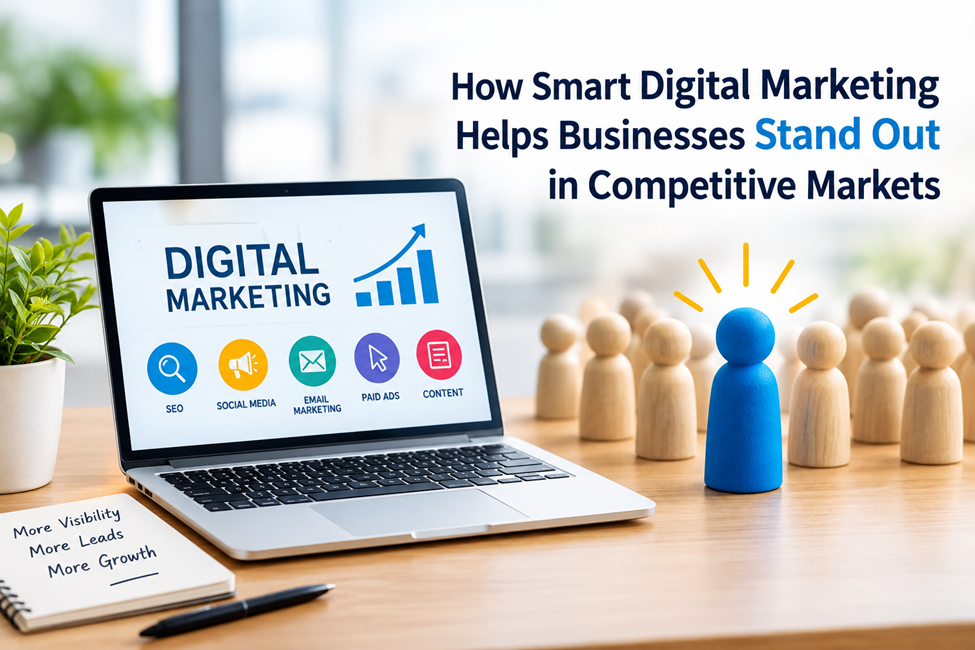
Digital marketing involves using online channels to promote a business, reach potential customers, and encourage measurable actions. These channels include search engines, websites, email, social media, and paid advertising.
Rather than treating every channel separately, businesses can connect their activities around shared goals, such as increasing enquiries, improving brand awareness, or generating qualified leads.
For example, a person searching for a local service might discover a business through Google, read a helpful article, visit its service page, and submit an enquiry form. Each interaction contributes to the customer’s decision-making process.
7 Ways Smart Digital Marketing Helps Businesses Stand Out
1. Improves Search Engine Visibility
Potential customers frequently use search engines to find services, compare providers, and research solutions. Businesses that appear for relevant searches have more opportunities to connect with people who already have an interest in what they offer.
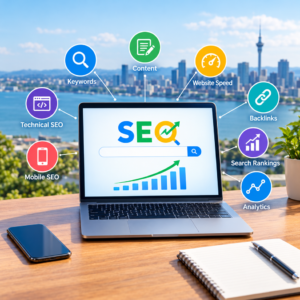
SEO helps improve a website’s ability to appear in organic search results. This includes keyword research, useful content, technical improvements, internal linking, and clear page structure.
Businesses should focus on search terms that match their services and customer intent rather than targeting keywords simply because they have high search volumes.
For example, a business serving Auckland customers should create relevant service content that reflects what local customers need. Reviewing SEO services can help businesses understand the areas involved in improving organic visibility.
2. Builds Trust Through Helpful Content
Customers want clear answers before choosing a provider. Content that explains services, addresses common concerns, and offers practical guidance can help a business demonstrate relevant knowledge.
Useful content includes:
- Informative blog articles that answer customer questions.
- Service pages explaining what a business offers.
- Frequently asked questions covering common concerns.
- Case studies demonstrating genuine business experience.
- Guides that help customers compare options or prepare for a service.
Content should be accurate, easy to understand, and written for the intended audience. Publishing more articles is not necessarily better if they repeat existing information or provide little practical value.
3. Strengthens Website User Experience
Marketing can attract visitors, but a confusing website can prevent them from becoming customers. Navigation, page speed, mobile usability, and clear calls to action all influence how easily visitors interact with a business.
Review your website to ensure that:
- Important services are easy to find.
- Pages load efficiently on mobile devices.
- Contact details are accessible.
- Forms are straightforward to complete.
- Content explains the next step clearly.
A website should help visitors move from discovering a business to understanding its offering and making an enquiry. Website design and development improvements can support this process when they address genuine usability or conversion problems.
4. Reaches the Right Audience
Effective digital marketing focuses on relevance rather than attracting the largest possible audience. A high volume of visitors has limited value if they are unlikely to need the business’s services.
Understanding your audience helps determine which channels, topics, and messages deserve attention.
Consider the following:
Audience need | Suitable marketing approach |
Finding a nearby service | Local SEO and accurate business listings |
Comparing service providers | Detailed service pages and case studies |
Researching a problem | Informative articles and practical guides |
Evaluating credibility | Reviews, clear business information, and evidence of experience |
Making an enquiry | Simple forms and clear calls to action |
When content matches customer intent, visitors can find relevant information without unnecessary steps.
5. Uses AI Search and Answer Engine Optimisation
Customers increasingly use conversational search tools and AI-generated answers to research products, services, and businesses. This creates another opportunity for businesses to make their information clear and accessible.
Answer Engine Optimisation (AEO) focuses on structuring website information so answer engines can better interpret relevant content and potentially reference it in generated responses.
Businesses can support this work by:
- Answering common questions directly.
- Using descriptive headings and logical content structures.
- Maintaining consistent business information.
- Demonstrating expertise through detailed, accurate content.
- Strengthening relevant internal links and technical foundations.
AI visibility is not guaranteed, so content should prioritise accuracy, usefulness, and genuine customer needs.
6. Generates and Nurtures Leads
Digital marketing should support more than website visits. It should help interested prospects take meaningful actions, such as requesting information, booking a consultation, or submitting an enquiry.
Lead generation improves when the website provides clear next steps and removes unnecessary barriers. Businesses can also use email marketing to follow up with people who have requested information or opted to receive updates.
A consistent process can help businesses:
- Capture enquiries through website forms.
- Respond promptly to potential customers.
- Organise lead information.
- Follow up at appropriate stages.
- Measure which channels generate qualified enquiries.
Automation can reduce repetitive administration and help ensure that leads receive timely communication. However, automated messages should remain relevant and respect customer consent and privacy.
7. Measures Results and Supports Continuous Improvement
One advantage of digital marketing is the ability to track performance and adjust activities based on evidence.
Businesses should identify meaningful measures before launching a campaign. These might include organic search clicks, relevant website visits, completed enquiry forms, qualified leads, and conversion rates.
Performance measure | What it helps assess |
Search impressions | How often pages appear in search results |
Organic clicks | How many visitors arrive through organic search |
Engagement | Whether visitors interact with useful website content |
Enquiry conversions | How often visitors complete a desired action |
Qualified leads | Whether marketing attracts potential customers who fit the business |
Cost per lead | How efficiently paid campaigns generate enquiries |
Use these measures to identify successful activities and areas that need improvement. Review performance regularly and make changes based on the results rather than assumptions.
How to Build a Practical Digital Marketing Strategy
A strong strategy starts with business objectives and a realistic understanding of the audience.
Follow these steps:
- Define your goals: Decide whether the priority is awareness, qualified enquiries, sales, or customer retention.
- Understand customer needs: Research the questions, problems, and search terms relevant to your audience.
- Review your current presence: Assess website content, organic visibility, lead generation, and existing marketing channels.
- Choose suitable channels: Focus on activities that match customer behaviour and business objectives.
- Create useful content: Develop pages and resources that address genuine customer needs.
- Measure performance: Track results and refine the strategy as new information becomes available.
Businesses that need an independent assessment of their current online presence can also review The Digital WOF, which examines digital marketing performance and helps identify areas requiring attention.
Common Digital Marketing Mistakes to Avoid
Even well-intentioned marketing efforts can underperform when the strategy lacks direction.
Avoid these common mistakes:
- Targeting broad keywords without considering search intent.
- Publishing repetitive content that offers little new information.
- Ignoring mobile usability and website navigation.
- Focusing on traffic without measuring enquiries or conversions.
- Using inconsistent business information across online platforms.
- Expecting immediate results from activities that require ongoing improvement.
- Treating SEO, content, and lead generation as unrelated activities.
A connected strategy helps ensure that each activity contributes to a clear business objective.
Conclusion
Smart Digital Marketing helps businesses compete by connecting visibility, useful content, website experience, and lead generation into one coherent strategy. Instead of relying on a single channel, businesses can build a stronger online presence by understanding customer needs, providing relevant information, and measuring the outcomes that matter.
For New Zealand businesses, consistent improvement is essential as customer expectations and online search behaviour evolve. Combining SEO, AEO, website optimisation, and effective lead management can create a stronger foundation for attracting relevant prospects and supporting sustainable growth.
If you want to identify opportunities to improve your online presence, Contact us to discuss your business goals and find a practical digital marketing approach that suits your needs.
Frequently Asked Questions
It helps businesses reach relevant audiences, communicate their value, build trust through useful content, and make it easier for potential customers to enquire.
The right approach depends on the business and its audience. Local SEO, useful website content, clear service pages, email marketing, and targeted advertising can support different business objectives.
SEO helps improve a website’s visibility in organic search results. It supports digital marketing by connecting relevant searchers with useful pages, services, and information.
Businesses can track relevant search clicks, website visits, enquiry conversions, qualified leads, and campaign performance. The most useful metrics depend on the objectives of the strategy.
Timelines vary by channel, competition, website condition, and campaign objectives. Paid advertising can generate traffic quickly, while organic SEO and content development generally require consistent work over time.